

Polyacrylamide (PAM) is a commonly used flocculant in processes such as wastewater treatment and sludge dewatering. However, many clients face a dilemma: should they choose solid PAM or emulsion PAM? Qingtai compares the two across several key dimensions to help you understand the selection logic and precisely match the product to your specific operational conditions.
Solid PAM (Granules/Powder)
Traditional mainstream form | Cost-effective | Suitable for long-term stockpiling
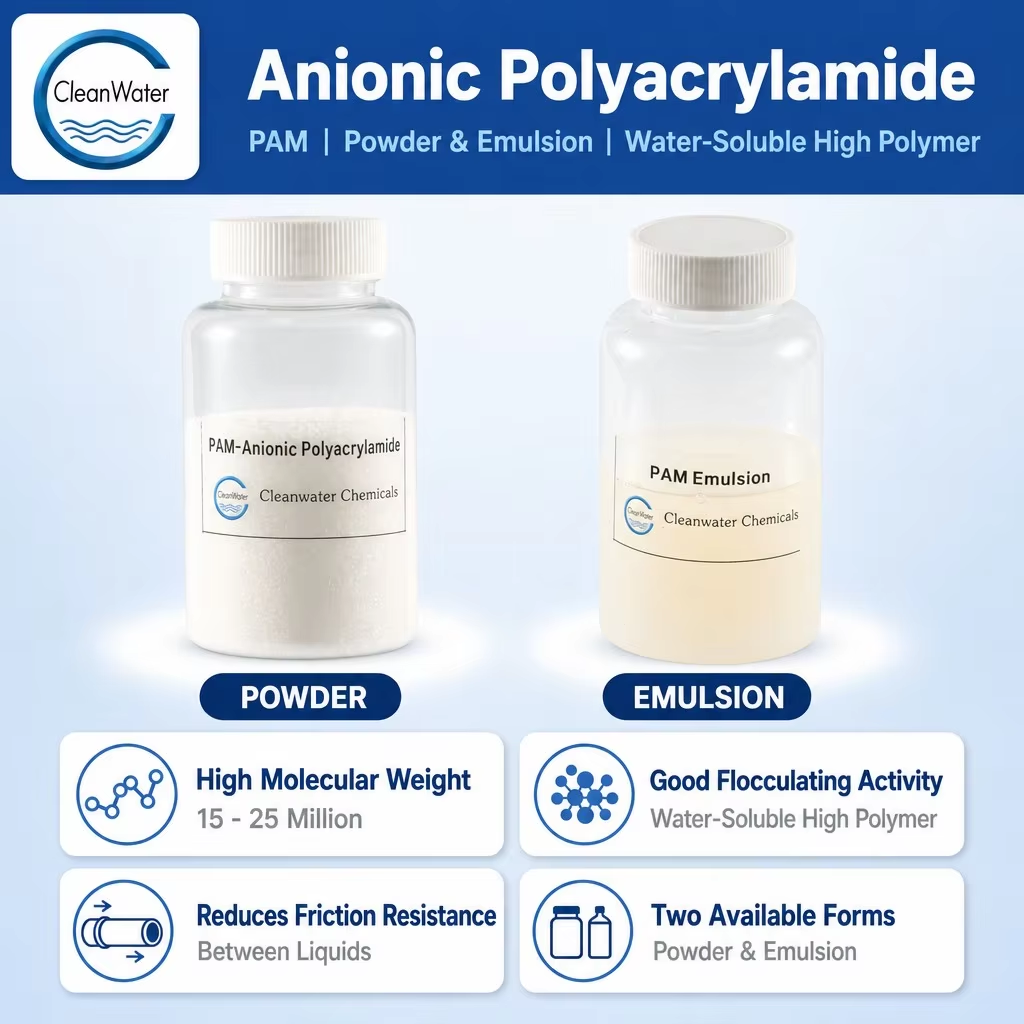
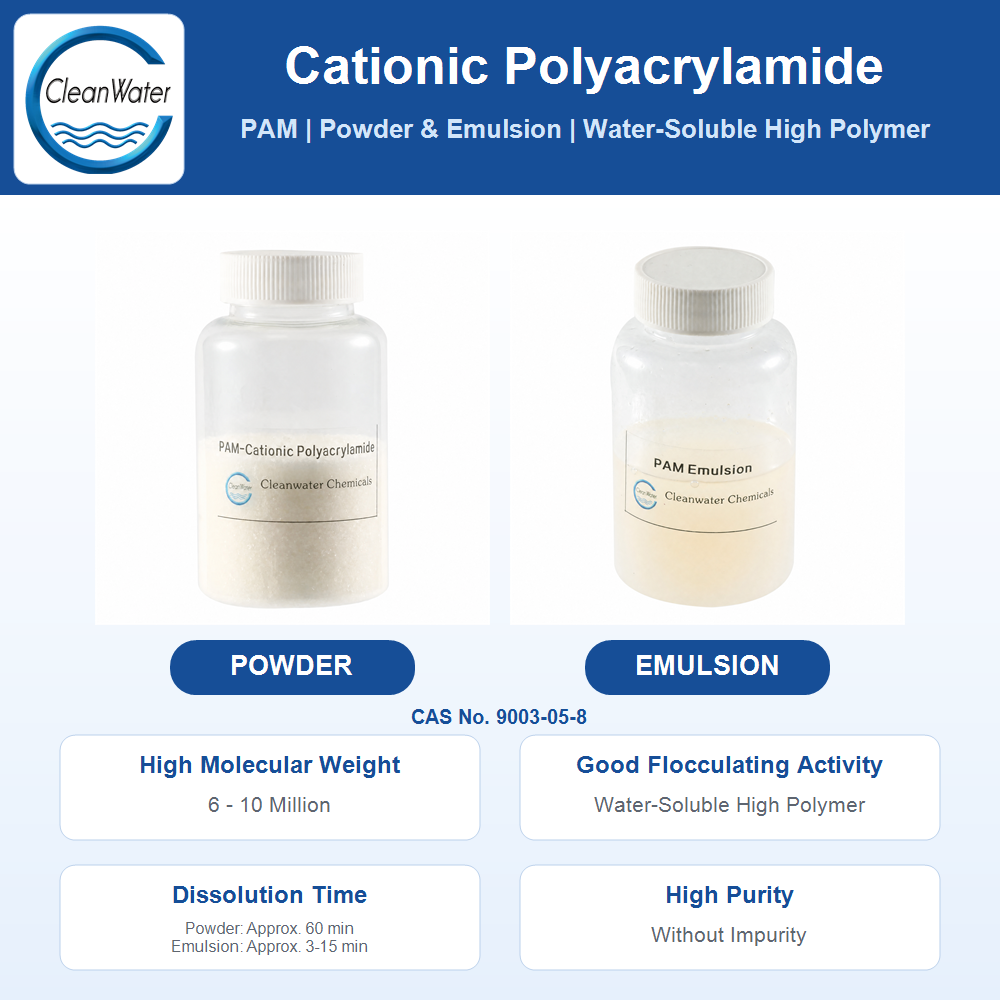
Appearance: White, free-flowing granules. Drawback: Prone to dust generation; protective measures are required during dosing. Active Content: 88%–90%; extremely high purity with a high proportion of active ingredients per unit. Dissolution Characteristics: Takes longer to dissolve (30–60 minutes) and requires vigorous stirring for full dissolution; incomplete dissolution can compromise flocculation performance. Storage Stability: Stable when stored in a cool, dry, sealed environment; shelf life of 1–2 years; suitable for long storage cycles. Transport & Storage Costs: Low transport volume per unit of active ingredient and low storage pressure; ideal for long-distance transport; significant overall raw material cost advantage. Dosing & Operational Convenience: Requires auxiliary equipment such as dissolution tanks and mixers; involves more manual handling steps. Key Application Scenarios: Projects requiring stable, continuous operation (e.g., municipal wastewater plants), high chemical consumption, and large-scale, long-term stockpiling.
Emulsion PAM (Viscous Liquid)
New, high-efficiency form | Ready-to-use | Suitable for rapid response
Appearance: Milky-white, viscous liquid; no dust pollution; cleaner dosing environment. Active Content: 30%–50%; contains solvents; active ingredient content is lower than that of solid PAM. Dissolution Characteristics: Also requires dilution/dissolution before dosing, but dissolves rapidly (only 3–10 minutes); disperses quickly in water, saving preparation time. Storage Stability: Contains water; logistics costs are higher for the same amount of active ingredient; liquid form occupies more storage space. Transportation and storage costs: Shelf life is approximately 6 months; storage requires strict environmental controls, specifically protection against high temperatures and freezing. Ease of dosing and operation: No prolonged mixing or maturation time is required; the product can be rapidly diluted inline and dosed via metering pumps. This eliminates the lengthy preparation wait times associated with solid PAM and integrates seamlessly with automated control systems and unmanned dosing stations, significantly reducing manual labor. Key application scenarios: Emergency wastewater treatment, temporary dosing projects, and “smart water” applications requiring high levels of automation.
Dosage scale and frequency of use . Choose solid agents for: High-volume, long-term, stable operations. Advantages: Low raw material costs and superior cost-efficiency per ton of water treated; ideal for large-scale, continuous water treatment needs with excellent value for money. Choose emulsion agents for: Low-volume usage or temporary emergency dosing. Advantages: Faster dissolution and rapid response to water quality fluctuations; suitable for small-scale treatment or quick intervention during unexpected events. Site conditions and automation .Choose solid agents for: Sites with existing dissolution tanks and sufficient manpower. Advantages: Leverages existing mixing and dissolution infrastructure and established manual workflows; ideal for retrofitting older water plants that already have traditional dosing setups. Choose emulsion agents for: Sites with automation systems or space constraints. Advantages: Enables rapid inline dilution and automatic dosing via metering pumps; eliminates the need for large dissolution/maturation tanks, saving equipment space and preparation time; perfectly suited for new smart water plants or compact dosing rooms.
 |
 |
 |
Post time: Sep-28-2026