

Keywords: Decolorizing flocculant, decolorizing agent, decolorizing agent manufacturer, Decolor
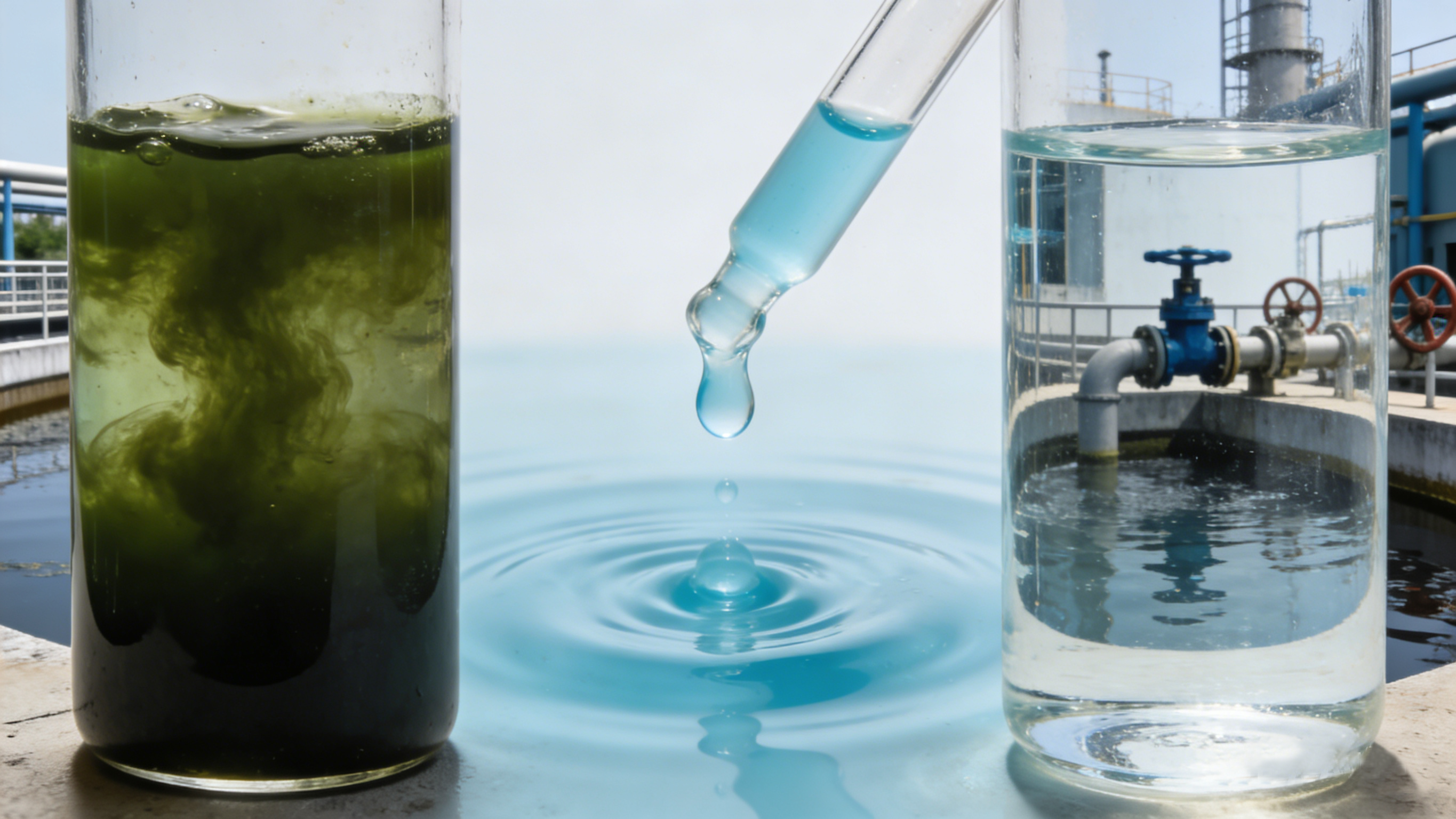
Between clear rivers and azure oceans, there lies a group of unsung “water quality guardians”—decolorizing flocculants. Like an experienced chef, they can transform murky “broth” into crystal-clear water. But this “chef” has its own temperament; the dosage, temperature, and stirring method all determine the final water quality outcome.
1. Dosage: Too Much, Too Little; Floods the Flood
Imagine adding water when cooking porridge: too little water, and the porridge will stick to the bottom; too much water, and it will be thin and tasteless. The dosage of decolorizing flocculant also needs precise control. One textile factory, in its eagerness for quick results, increased the recommended dosage by 30%, resulting not only in failure to achieve the desired effect but also in overly dense flocs that settled too quickly, allowing residual dye molecules in the water to resuspend like “fish that slipped through the net.” Another dyeing factory, strictly adhering to the recommended ratio of 0.5‰, determined the optimal dosage through three small-scale trials, ultimately stabilizing the effluent color below 10 degrees, meeting the national Class I discharge standard.
2. Temperature: The Speed Code of Chemical Reactions
The effect of temperature on the flocculation effect of decolorizing flocculants is like boiling an egg: cold water requires patience, while boiling water causes rapid coagulation. At a paper mill in northern China, when water temperatures plummeted to 5°C in winter, technicians reduced flocculation time from 30 minutes to 15 minutes by controlling the dissolution temperature of the flocculant at around 40°C, allowing the molecular chains to fully expand. Meanwhile, at an electroplating plant in southern China, during the high temperatures of summer, adding a retarder kept the reaction temperature below 25°C, preventing floc breakage.
3. pH Value: The Art of Acid-Alkalinity Balance
pH value, like the acidity or alkalinity on a palette, directly affects the “personality” of flocculants. A food processing plant, treating oily wastewater, found that when the pH was between 6 and 7, flocculant molecules could attract oil particles like magnets. However, when the pH exceeded 8, the flocs became loose and brittle, and the COD removal rate decreased by 40%. By installing an online pH monitor, technicians achieved real-time control, stabilizing the effluent COD below 50 mg/L.
4. Stirring: Letting Molecules Dance a Perfect Waltz
The speed and time of stirring are like the rhythm of a dance: too fast will break up the flocs, too slow will not mix them thoroughly. A municipal wastewater treatment plant adopted a “fast then slow” stirring strategy: the first 2 minutes were spent mixing rapidly at 150 rpm to ensure full contact between the decolorizing flocculant and pollutants; the next 5 minutes were spent mixing slowly at 30 rpm to allow the flocs to gradually grow. This combination of fast and slow stirring increased the floc particle size from 50 μm to 200 μm, and the settling speed increased by 3 times.
5. Time: The Art of Sedimentation
Settling time is like the winemaking process: too short and the wine is weak, too long and it loses its freshness. A chemical industrial park found through comparative experiments that when the settling time was extended from 30 minutes to 45 minutes, the SS removal rate increased from 85% to 92%. However, after 60 minutes, the settled flocs were resuspended due to “sitting too long,” causing the effluent turbidity to rebound.
From dosage and temperature to pH value and stirring, every detail of the decolorizing flocculant determines the final water quality. As an experienced water treatment engineer once said, “We are not treating water, but communicating with molecules.” When every drop of the agent finds its proper place, every degree of temperature is just right, and every minute of sedimentation is done with patience, the clear water will eventually bear witness to this reverence for nature.
Post time: Dec-26-2025